There are certain phrases that immediately reveal whether someone has spent real time in San Diego.
“Carne asada burrito, with guac.” “California burrito, extra red sauce.” And, maybe most importantly: “I’ll take the rolled tacos with guac and cheese.”
Not taquitos. Not flautas. Rolled tacos.
Outside San Diego, that phrase can sound oddly literal, like calling a burrito a “folded bean tube.” But in San Diego, rolled tacos are not just a menu item. They are part of the local taco shop language — right up there with orange salsa, paper plates, styrofoam cups of horchata, and the eternal debate over which Roberto’s-adjacent shop is the “real” one.
So let’s settle it, or at least argue about it in the most San Diego way possible.
Are rolled tacos, taquitos, and flautas the same thing? Kind of. Are they completely different? Also kind of. Does San Diego care what the rest of the country calls them? Absolutely not.
The San Diego Answer: They’re Rolled Tacos
In San Diego, “rolled tacos” usually means small corn tortillas wrapped tightly around shredded beef, chicken, or sometimes potato, then fried until crisp and buried under guacamole and shredded cheese.
The important part is not just that they are rolled. It is the whole plate experience.
A proper San Diego rolled taco order usually includes:
- Three, five, or twelve rolled tacos
- A generous smear or scoop of guacamole
- A pile of shredded yellow cheese
- Sometimes lettuce
- Sometimes sour cream
- Always hot sauce nearby
- Ideally eaten from a taco shop counter, beach wall, parking lot, or passenger seat
That last part matters. Rolled tacos are not really fancy food. They are taco shop food. Late-night food. After-surf food. “I need something crispy, salty, and covered in guac” food.
And yes, technically, many people outside San Diego would look at the same plate and say, “Those are taquitos.”
They are not wrong. They are just not speaking San Diego.
So What Is a Taquito?
A taquito literally means “little taco” in Spanish. In common U.S. usage, taquitos are small rolled tortillas filled with meat or cheese and fried until crisp. Corn tortillas are generally associated with taquitos, and the dish is commonly served with toppings like guacamole, sour cream, lettuce, or cheese.
Here’s where San Diego’s food history gets interesting: El Indio, the classic San Diego restaurant founded as a tortilla factory in 1940, says its founder Ralph Pesqueira Sr. coined the word “taquito” for a small ready-to-eat rolled taco during World War II, when nearby factory workers wanted portable lunch food. San Diego Magazine has also noted that El Indio is widely cited as the birthplace or popularizer of the taquito in the U.S., while admitting — as all good food-origin stories must — that the claim is debated.
So here is the funny part: San Diego may have helped popularize the word taquito, but many San Diegans still prefer saying rolled tacos.
That is extremely San Diego.
What About Flautas?
Flautas are the more elegant cousin in this argument.
The word flauta means “flute,” which makes sense because the finished food is long, thin, and rolled like a little edible instrument. In many explanations, flautas are described as larger than taquitos and often made with flour tortillas, while taquitos are smaller and more often made with corn tortillas.
That said, the tortilla rule is not universal. Some recipes and restaurants use corn tortillas for flautas too. Some descriptions connect flautas to regional Mexican cooking, while others treat the name as a general term for long, crisp rolled tacos.
So the cleanest version is this:
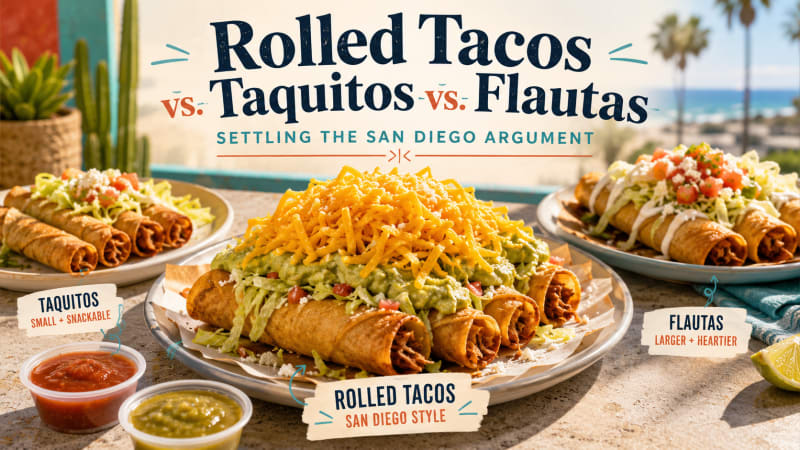
Taquitos are usually smaller, often corn tortilla, snackable, and crisp. Flautas are often longer, sometimes flour tortilla, and more “flute-like.” Rolled tacos are what San Diego calls the taco shop version, especially when served with guacamole and shredded cheese.
The differences are real, but they are also flexible. The name often depends on region, restaurant, family tradition, and how willing someone is to fight about tortillas.
The Tortilla Test: Corn vs. Flour
If you want the simplest technical distinction, start with the tortilla.
In San Diego taco shops, rolled tacos are almost always made with corn tortillas. That gives them the crunch, flavor, and slightly rustic texture that works perfectly with guacamole and cheese.
Flautas, depending on where you are, may be made with flour tortillas, which creates a longer, smoother, sometimes softer-crisp shell. Flour tortillas are also more common in borderlands and Tex-Mex-style cooking, while corn tortillas have deeper roots in Mexican cuisine and are widely used for tacos, tostadas, chips, and flautas.
But again, food does not always obey the chart. You can find corn tortilla flautas. You can find taquitos that look suspiciously like flautas. You can find restaurants that use all three names almost interchangeably.
San Diego cuts through the confusion with blunt practicality:
Are they small tacos rolled up and fried? Do they come with guac and cheese? Cool. Rolled tacos.
The Filling: Beef, Chicken, Potato, and the Taco Shop Standard
Most San Diego rolled tacos are filled with shredded beef or shredded chicken. Beef is probably the classic taco shop move, especially when paired with guacamole. Chicken is common too, and potato rolled tacos have their own loyal following.
The filling is usually not overloaded. This is not a burrito. The goal is balance: enough filling to give flavor, but not so much that the tortilla explodes or turns soggy.
A good rolled taco should have:
- A crisp shell
- A savory filling
- Enough structure to survive dipping
- Enough oil-kissed crunch to feel satisfying
- A topping situation that makes it impossible to eat neatly
If the rolled taco shatters into dry tortilla shards, it has gone too far. If it bends like a sad enchilada, it has not gone far enough.
The sweet spot is crunchy outside, flavorful inside, and messy on top.
The Guacamole Sauce Is Not Optional
This is where San Diego separates itself from the freezer-aisle taquito world.
A rolled taco without guacamole is technically food, but spiritually incomplete.
San Diego taco shop guacamole is often thinner and saucier than chunky table guacamole. It may be avocado-forward, salsa-like, creamy, or somewhere in between. The point is that it coats the rolled tacos. It softens the crunch just enough. It gives the shredded cheese something to cling to. It turns fried tortilla tubes into a full plate.
Then comes the shredded cheese — usually the bright yellow kind, piled high enough that half of it falls onto the plate. This is not the time for restraint. San Diego rolled tacos should look like someone got a little too enthusiastic with the cheese handful and nobody stopped them.
The true San Diego version is not delicate. It should look like a crispy golden pile hiding under guacamole, cheese, and salsa potential.
How to Order Without Sounding Like a Tourist
Here is the practical field guide.
At a San Diego taco shop, say:
“Can I get five rolled tacos with guac and cheese?”
That is the basic order. Clean. Local. No unnecessary explanation.
Other acceptable variations:
“Three rolled tacos, beef, with guacamole.” “Five rolled tacos with everything.” “Rolled tacos with guac, cheese, and sour cream.”
What not to do?
Do not over-pronounce “flautas” unless the menu actually says flautas. Do not ask if the “taquitos” are like “Mexican egg rolls.” Do not request nacho cheese unless that is specifically the shop’s thing. Do not expect a delicate appetizer presentation.
And most importantly, do not act surprised when the cheese is unmelted. On San Diego rolled tacos, shredded cheese often lands cold on hot fried tacos and slowly softens into the guacamole. That is part of the experience.
The Friendly Debate: Are San Diegans Wrong?
No.
Are they being stubborn?
Maybe.
But regional food language is part of the fun. The same country that argues over soda vs. pop vs. Coke can handle rolled tacos vs. taquitos vs. flautas.
San Diego’s use of “rolled tacos” makes sense because it is direct, descriptive, and tied to the taco shop culture of the city. It tells you exactly what you are getting, but it also signals a specific style: crispy corn tortilla rolls topped with guacamole and cheese, served fast and without fuss.
“Taquito” may be the broader term. “Flauta” may be the more traditional or restaurant-style term in some places. But “rolled tacos” belongs to San Diego in the same way “California burrito” does. It is not just a name. It is a local dialect.
Final Verdict
So, what is the difference?
A taquito is usually a small rolled fried taco, often made with corn tortillas. A flauta is often longer, sometimes made with flour tortillas, and named for its flute-like shape. A rolled taco is San Diego’s taco shop version: crispy, compact, covered in guacamole, buried in shredded cheese, and best eaten with red or green salsa close by.
The rest of the country can keep saying taquitos. Some menus can keep saying flautas.
But in San Diego, we know what we mean.
They are rolled tacos.
And yes, we’ll take five with guac and cheese.